Oura Ring Postpartum Mode
Concept Exploration
Spring 2026
The Problem
Oura's Pregnancy Insights experience is contextual, encouraging, and physiologically aware — but that support ends at birth. In postpartum, when women face hormonal shifts, sleep disruption, and elevated mental health risk, the product reverts to a baseline experience that can feel misaligned or even anxiety-inducing.
This creates a product gap at one of the most emotionally vulnerable and behaviorally intense stages of the women's health journey. While the medical system is already baby-centered, Oura's current experience unintentionally compounds that gap by treating postpartum physiology as poor health rather than expected recovery.
Approach
- —Analyzed 3 years of postpartum Oura discussions across 5 subreddits to surface recurring user pain points.
- —Interviewed 9 postpartum mothers to understand lived challenges across sleep, recovery, breastfeeding, and mental health.
- —Translated insights into an MVP for “Postpartum Mode” and built an interactive prototype to demonstrate the experience.
AI-Enabled Workflow
Used AI tools throughout the process to accelerate research, synthesis, product definition, and prototyping. I used AI agent tools to analyze postpartum Oura discussions on Reddit, LLMs to synthesize themes across qualitative inputs, ChatPRD to shape MVP requirements, and Lovable to rapidly build and iterate on the prototype.
Key User Insights
- —Postpartum users felt Oura lost context right when they needed it most. Pregnancy Insights felt supportive and physiologically aware, but that experience ended at birth with no equivalent postpartum guidance.
- —Standard recovery coaching often amplified anxiety during newborn exhaustion. Generic prompts like "sleep more" or low-readiness signals felt disconnected from postpartum reality and could make users feel like their bodies were failing.
- —Users lost trust when postpartum physiology was treated like poor health. Breastfeeding, fragmented sleep, elevated heart rate, suppressed HRV, and disrupted cycle patterns were often surfaced as concerning rather than interpreted as expected parts of recovery.
What I Built
Designed and prototyped "Postpartum Mode," an MVP concept for Oura that adds contextual interpretation to existing signals during the postpartum period.
Must-have MVP features
- —Postpartum mode toggle for the first 0–6 months, extendable
- —Contextual interpretation of HRV, sleep, and recovery signals
- —Supportive tone guardrails during postpartum recovery
- —Breastfeeding context layer to interpret elevated heart rate and stress
Nice-to-have features
- —Night-feed tagging
- —Better nap + fragmented sleep detection
- —"What's normal right now?" guidance
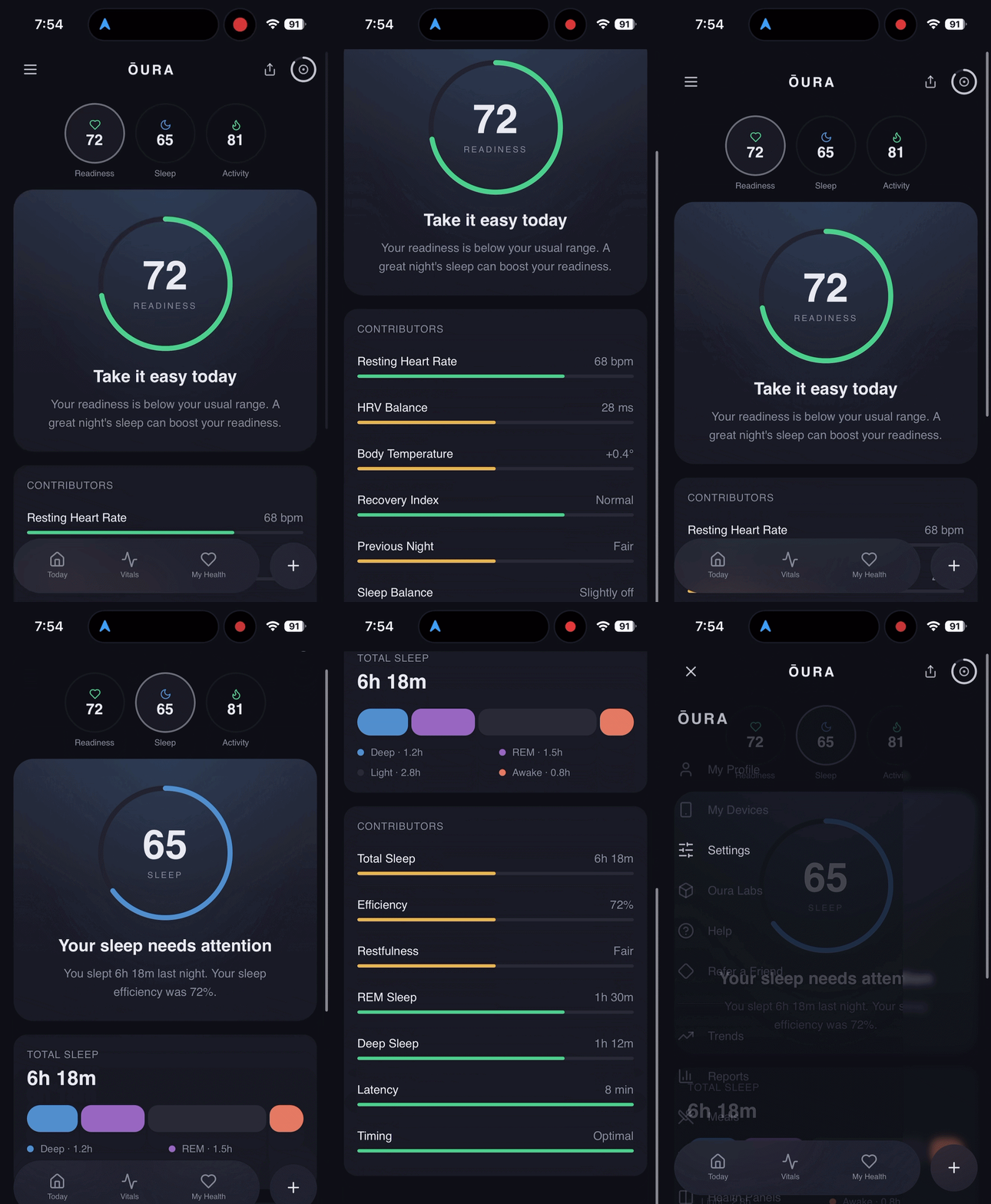
Before: No postpartum mode
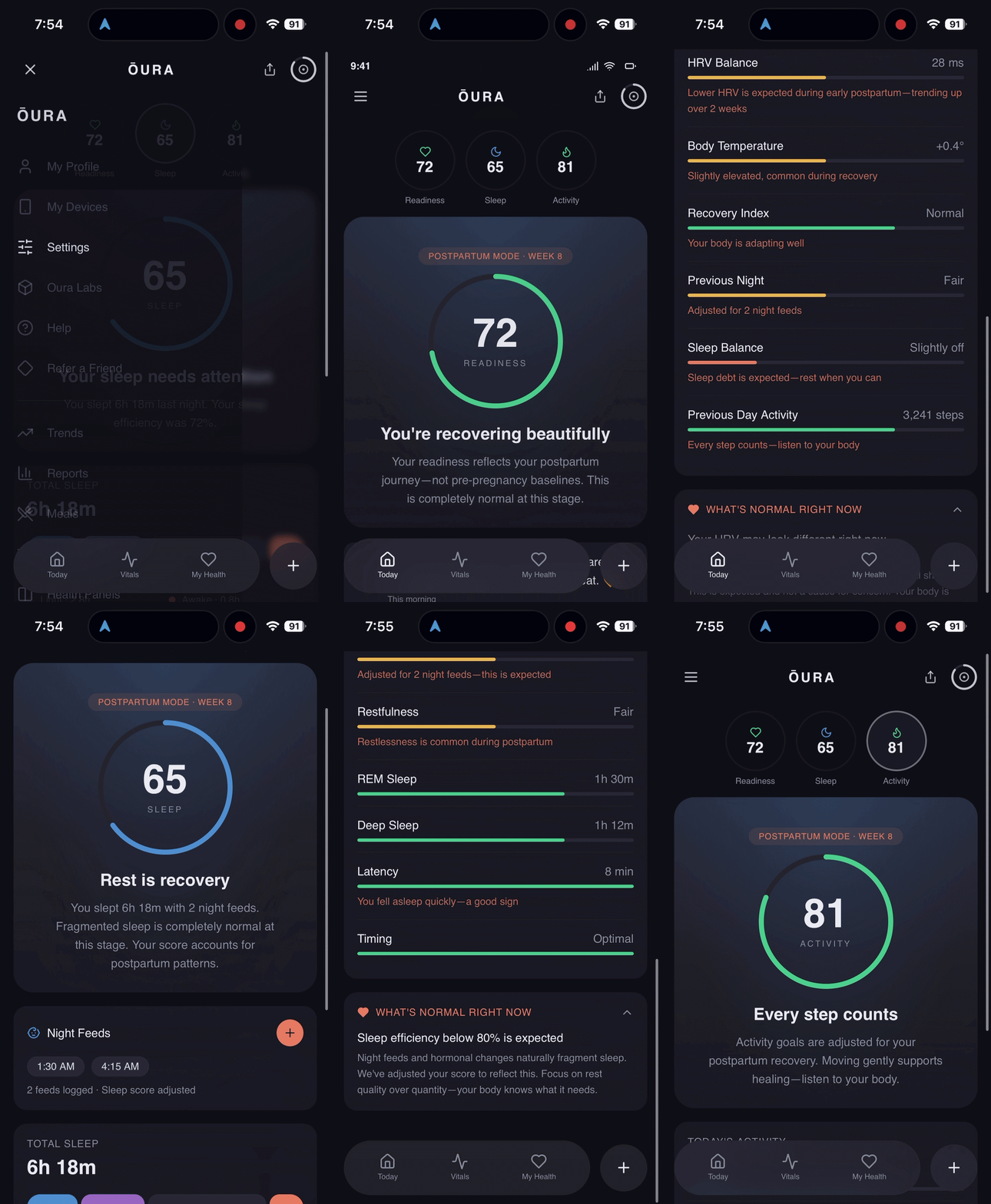
After: Postpartum mode ON
Why This Matters for Oura
- —Retention: Pregnancy can drive strong engagement, but postpartum is when trust is either reinforced or broken. A misaligned experience at this stage risks churn among highly engaged users.
- —Lifecycle strategy: Oura already supports key women's health stages like cycle tracking, pregnancy, and perimenopause. Postpartum is the missing stage between pregnancy and longer-term hormonal health.
- —Brand fit: With a majority female member base, supporting women through postpartum aligns directly with Oura's broader mission to help women understand their bodies across major life transitions.
What I’d Do Next
- —Test the prototype with postpartum Oura users.
- —Pressure-test MVP feasibility and edge cases.